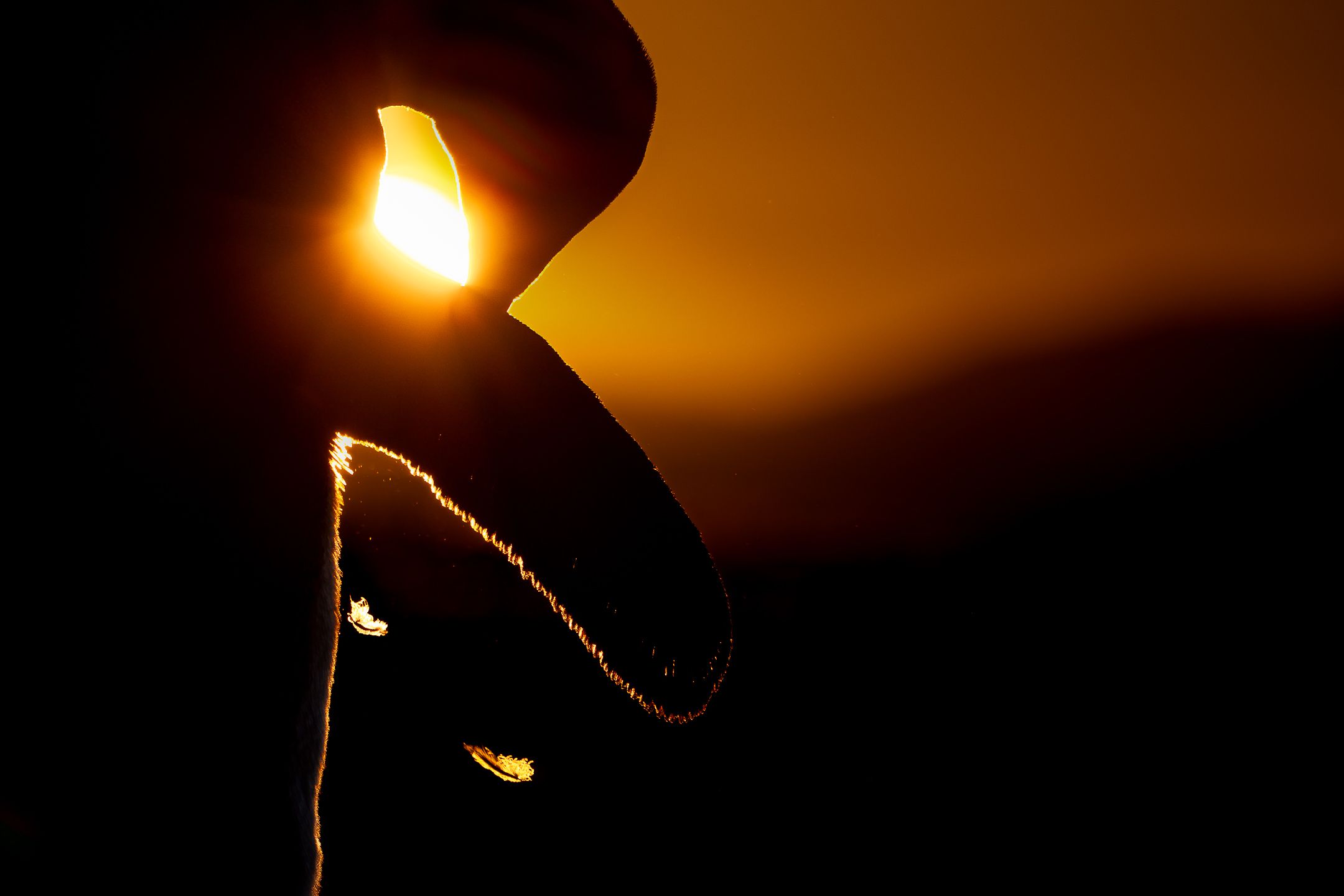
This year I was one of five judges for Nature Photographer of the Year (NPOTY), one of the largest international nature photography competitions. Each of us worked through roughly 27,000 images. It was a monumental task, but it offered insights that are impossible to gain without taking part in the judging process.
I expected to come away with opinions about the kinds of images that win. I did, and some of those observations are already informing the work I do with mentees.
But as the judging continued, another pattern became hard to ignore: the gap between making a photograph and being able to judge it clearly, especially when the photograph is our own.
That gap explains a great deal about why talented photographers can work seriously for years without making the progress they expect. It also explains why more experience, better equipment, expensive destinations, and even occasional contest success do not necessarily close it.
After weeks of looking at submissions, the common failure points were fairly easy to identify: composition, timing, light, behavior, editing, visual storytelling, and originality. All were shaped by decisions photographers made before and after pressing the shutter.
Some deserve articles of their own. This article is about the problem beneath all of them: the difficulty of seeing your own work clearly enough to know what it needs to stand out.
Three kinds of entries
When you look at thousands of images submitted to a contest, in any particular category, you notice patterns that individual photographers may not, or at least not as easily and sharply.
Anyone following nature and wildlife photography online sees some of it. Species, light, locations, and compositions repeat so reliably that a certain kind of image eventually blends into one large mass of photographs that could have been made by many, which makes any single one forgettable.
Now, it is important to point out that making beautiful nature imagery is in itself a worthy and challenging objective, not easy to excel at, and not diminished in any way by what happens in a photo contest. But the nature of a contest environment means that images have to separate from the masses in order to place.
As I saw it, the images entered into NPOTY fell roughly into three groups.
One: images made, most likely, by photographers still early in their skill development, who have not yet built the eye required to evaluate the artistic merit of a photograph. The emphasis is on documenting an interesting encounter. There may be little purposeful composition, weak separation between the subject and its surroundings, light that has merely been recorded rather than used, and few signs of a conscious choice beyond pointing a camera at the scene.
These photographs did not cross the threshold at which disagreements about taste and preferences could influence the outcome. Most photographers begin here.
Two: images with a clear purpose. There may be excellent light, engaging composition, strong technical execution, interesting behavior, or a recognizable attempt at visual storytelling. These photographers knew what they were doing and knew their tools, and likely considered it one of their best photographs.
What was missing was enough distinction to separate the capture reliably from the field of surrounding images. Another owl in flight among hundreds of owls in flight. Another lion on a rock beside many other lions on a similar (or the same!) rock. Another well-executed portrait that is pleasant to look at and difficult to remember.
Images in this group can perform very well online, but in a contest, where images are compared with hundreds or thousands of other photographs of similar subjects, they too easily blur together and disappear from the mind.
Three: images that made me pause, because they had something no other image had, or were at least different enough to break the pattern.
What breaks the pattern is a separate article, and also depends on what comes before, but for now: if an image made me think WOW!, or What am I looking at?, or What a cool perspective!, or made me laugh, or just made me curious, it got a second look.
That does not mean every strange or unconventional image was strong.
Some unusual photographs were original. Others were merely confusing. The strongest combined surprise with depth and control. Once they stopped me, they continued to pull me in and held together or, even better, became stronger.
Level one made up much of the submission pool. Level three was the work that advanced to my shortlist. Those shortlists were not identical across judges: an image one judge considered level three might remain level two for another. The broad gap between level one and the rest was usually clear. The line between levels two and three was less clear and sometimes highly contested.
Two photographs from my own archive, made during the same encounter, illustrate the distinction.
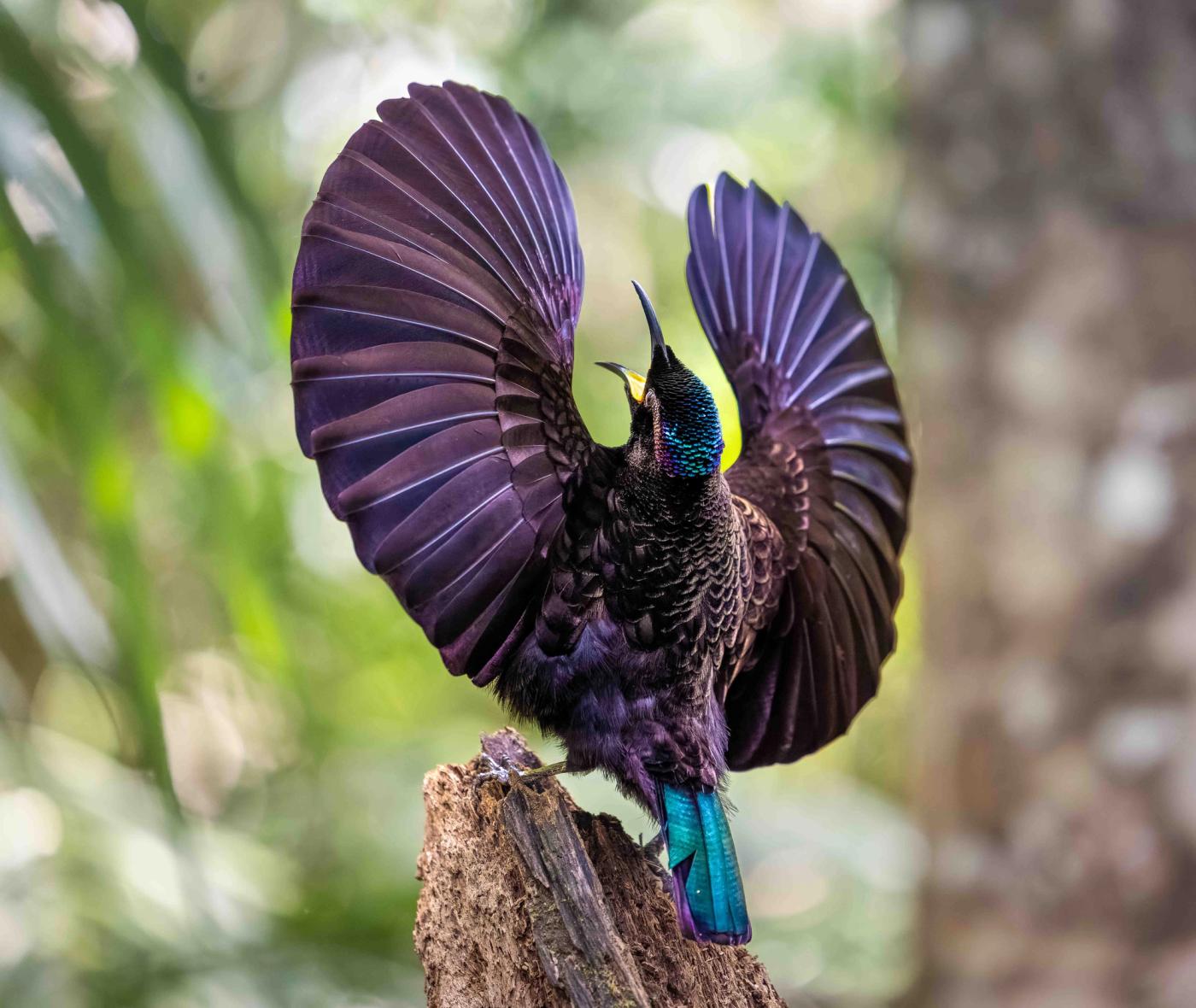
Image 1. Victoria's Riflebird. Queensland, Australia
© Steffen Foerster, 2024
For a long time this was one of my favorite photographs from my time photographing Victoria’s Riflebirds in Queensland, Australia. It shows the full display, the bird, and a hint of the rainforest around it. What I see more clearly now is that it sits between two ideas: the bird is too large for the environment to carry the frame, while the background prevents it from becoming a clean portrait. The behavior is impressive, but the photograph remains largely descriptive.
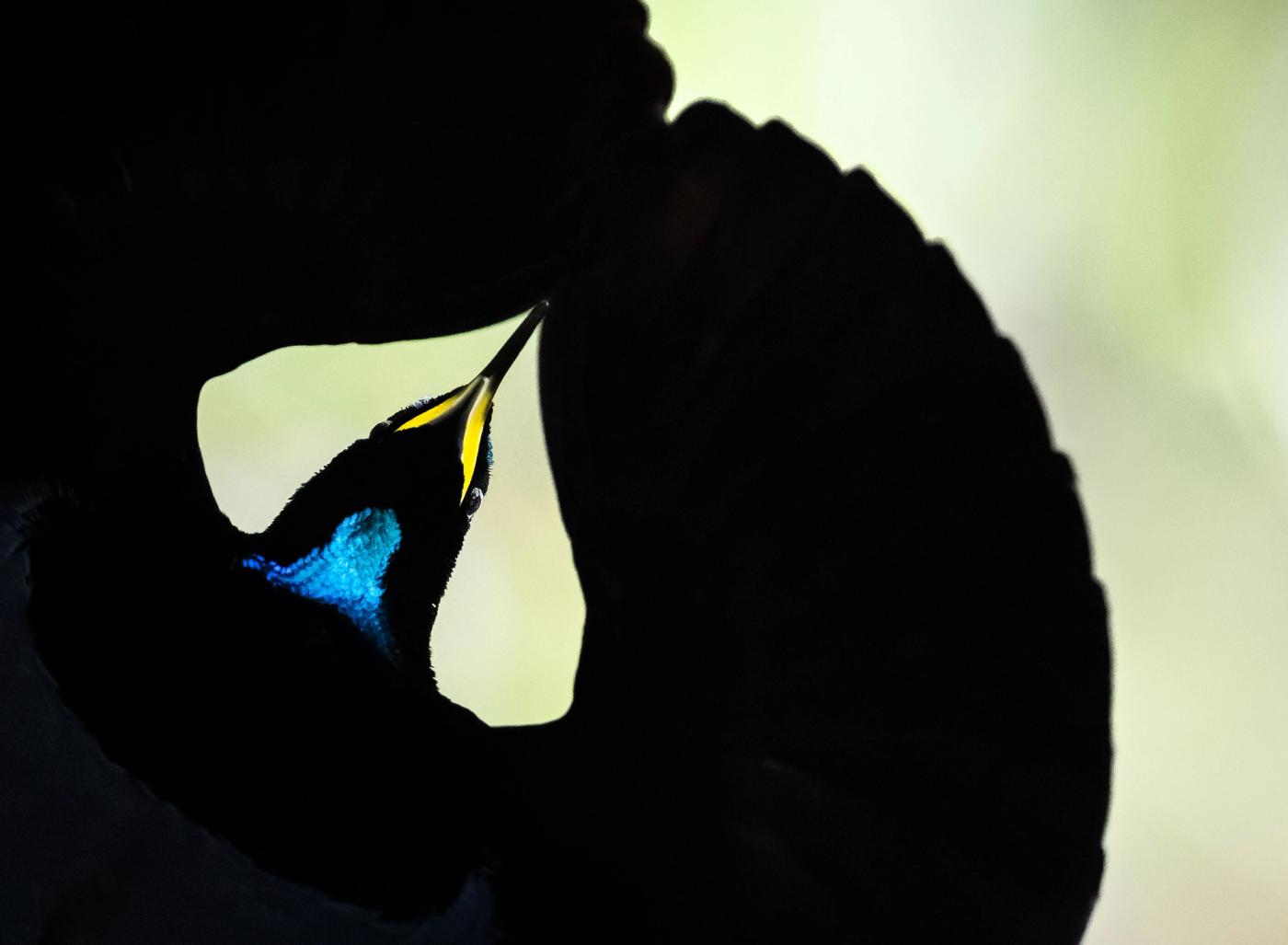
Image 2. Victoria's Riflebird. Queensland, Australia
© Steffen Foerster, 2024
The second image is less immediately legible. The beak meets the tip of the opening formed by the wings for only an instant, turning the display into a graphic shape that takes a moment to decipher. That pause is part of what gives the photograph its strength.
The first image was never shortlisted. The second became a runner-up in Australian Geographic Nature Photographer of the Year and was highly commended in Bird Photographer of the Year.
Contest results do not prove that one photograph is objectively better than another. But this example shows something I had not judged clearly in my own work: a more complete description of the behavior may not make the strongest impression, compared to a more focused and original interpretation.
Two roads to the top
So how do you get to level three? That’s the million-dollar question.
There are many ways to learn, but I think most photographers end up following one of two quite different paths.
There is the long, hard road, which can cost you hundreds of thousands of dollars over decades and may never get you to where you want to go.
And there is a shorter road, not a shortcut, that can deliver results in much less time and at a fraction of the cost.
Most people do it the hard way.
Why?
Partly because of ego, the thing that stops us asking for help in every part of life. Partly contentment, being satisfied shooting for ourselves and our friends, for the enjoyment of it, with no interest in the next level, which is a perfectly good place to be. And partly because it is simply easier to reach for a solution outside yourself, a camera or a destination, than to work on the craft.
But the real reason most people stay on the long road is this:
Think about it.
You shoot the thing. You edit it. You look at it for so long that you stop seeing it. Then you enter it somewhere, and months later a result comes back with nothing attached.
Yes or no. No reason.
Ten years of this can easily leave you with the same blind spots. You stay stuck.
Why we misjudge our own work
There is research behind this problem, and as a former academic I am a stickler for research.
Creativity researcher Justin Berg wanted to know who could accurately predict whether a new idea would succeed. He studied circus performers, an unusual but clever choice, because circus acts are creative work with a measurable audience verdict. He had performers predict how audiences would respond to new acts, their own and others', then checked those predictions against the reactions of more than 13,000 audience members.
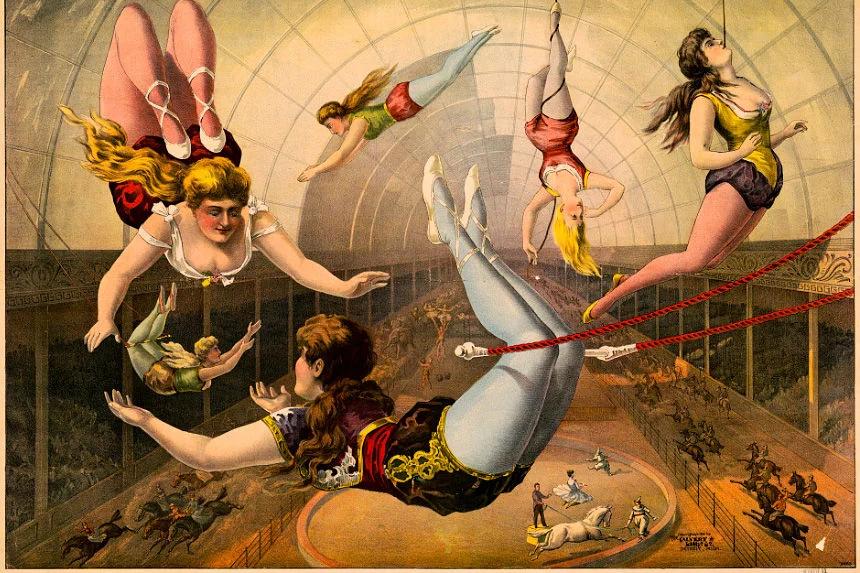
1890-1900, Calvert Litho. Co., Library of Congress Prints and Photographs Division, Washington, D.C.
The result: performers were good at forecasting the success of other people's acts. At forecasting their own, they were significantly worse.
Perhaps worse, an odd win along the way can convince you that you understand what made the image successful.
You may have seen it happen: a genuinely original winning image, followed by a portfolio in which the same level of originality is difficult to find.
Berg's study caught this too. The performers' ability to judge their own work got measurably worse when they had previously had a weak idea that happened to succeed anyway.
A lucky hit does not just flatter you. It teaches you the wrong lesson about what you did right, and you carry that into everything you make next.
What a contest result cannot tell you
A contest result can tell you whether a particular panel advanced a particular image. That’s about it. It cannot tell you why.
A strong photograph may fail to connect with one panel and succeed elsewhere. A weaker one may advance because several judges respond to something another panel would dismiss. I explored those dynamics in more detail in Why Great Images Don’t Always Win.
The problem here is practical: a yes-or-no result does not tell you whether you misjudged the photograph, encountered the wrong panel, or both. It gives you almost nothing to work on next.
The things you can buy
Without better information, most of us begin by fixing what we can see.
Usually, that means equipment.
There is an entire industry built around the idea that the gap between your photograph and the one receiving an award is a sensor, a faster autofocus system, or a different lens. It is an appealing idea because you can act on it immediately. The problem can be solved by Tuesday, with a credit card.
Equipment does matter. A certain technical threshold has to be crossed, and particular subjects genuinely require particular capabilities.
Above that threshold, however, equipment is rarely the reason one thoughtful image defeats another.
When gear fails to close the gap, the next answer is often the destination.
Perhaps a more remote location with rarer animals, more dramatic scenery, or access few other photographers have will make all the difference.
Access matters. Location changes what is possible, and I won’t pretend otherwise.
But reaching for a destination can become the same move as reaching for better equipment. It is the part of the problem that can be solved by spending money, so it is the part people solve.
And by itself, it mostly does not work.
Most people come home from extraordinary places with two kinds of images. Some are perfectly good and completely familiar, the photograph that location has produced hundreds or thousands of times, technically strong and nearly interchangeable with everyone else's.
Others are the same weak frames that fill the bottom of every contest, just taken somewhere more expensive. Very few rise to level three, and sometimes by accident.
What matters is what you do once you arrive, and that is where many photography trips quietly fall apart. You arrive without a plan, so you shoot whatever appears. Nobody is beside you when you make decisions, so learning to make better decisions is largely based on trial and error.
Trial and error can work, but it can take a long time, and learning from it often comes too late. By the time you are home looking at the files, you cannot even reconstruct what the better choice would have been.
You just have more files.
What you can begin doing on your own
There are ways to make your own judgment more reliable.
First, try to separate the photograph from the experience of making it. Set aside how rare the subject was, how difficult the trip was, and what happened just outside the frame. Ask what the image itself gives the viewer.
Second, compare rather than inspect. Put several frames from the same encounter beside one another. Then place your preferred image beside strong photographs of similar subjects. Differences that remain invisible in isolation often become obvious through comparison.
Finally, look across time. Gather twenty photographs you once considered among your best and ask what keeps repeating: distance, perspective, lighting, composition, processing, or the kinds of moments you select. A repeated choice may be part of your style. It may also be a limit you stopped noticing.
Before posting or entering an image, ask one more question:
If the answer is mainly rarity, sharpness, proximity, great light, or the difficulty of the encounter, you may be valuing what happened more than what the photograph became.
These habits can sharpen your judgment. They will not reveal everything, but they give you more to work with than another unexplained contest result.
What frame would you choose?
Let’s practice.
I shot these four frames during the same brief encounter while following a pride of lions in the Serengeti on a rainy afternoon.
Before reading on, pick your top choice, and try to explain why.
Four frames from the same sequence, photographed only moments apart.
 © Steffen Foerster, 2025
Frame 1
 © Steffen Foerster, 2025
Frame 2
 © Steffen Foerster, 2025
Frame 3
 © Steffen Foerster, 2025
Frame 4
Made your choice?
My personal choice is frame 2. Here is my reasoning: the lion and lioness face one another most directly and nearly touch noses, while the lioness remains clearly behind him. That creates depth but also concentrates the scene around their relationship. The result feels like a quiet confrontation.
Someone else may prefer another frame and argue for it. Maybe you did. I also like frame 4. The male turns farther toward the camera than he does in frame 3, his eye is more prominent, and his expression carries more of the image. But that choice makes the photograph more about the male as an individual and less about the encounter between the two individuals.
There is no single right answer. Choices reveal what different observers value.
When you are making this choice as a photographer, it is about what you want the image to be about, what story you want it to tell. When you are making this choice as a judge between similar frames in a submission pool, you are often deciding which story speaks more strongly to you.
Comparing closely related frames, then saying out loud or writing down both your choice and your reasoning, is a useful practice you can begin today that will help you look closer and see more clearly.
What actually moves you forward
Nobody comes out of the womb composing.
The ability to recognize a strong photograph, plan for it, and respond when the moment changes is learned.
The exercise above is one way to practice. Make your initial choice, then keep looking. Ask what else the scene could become, what would make the frame less predictable, and which decisions are still under your control. Over time, the same approach improves how you read light, anticipate behavior, and recognize when the obvious photograph is not enough.
My background as an animal behavior scientist helped me learn to anticipate what a subject might do next, but close observation can build that skill too.
The difficult part is not whether these skills can be learned. It is identifying which one is limiting your work, and whether your practice is actually correcting it. That is where outside feedback can shorten the process.
The value of mentorship
I have always been largely self-taught, and I started early. So I learned much of what I know about photography over the better part of four decades, which is most of my life. A slow and frustrating process. And not everyone has that kind of time.
The biggest jumps in my skills have occurred when I sought outside help, particularly that of a mentor, someone whose work I admired.
My most recent mentorship cost more than I had ever spent on a single trip. I looked at the price and thought about all the places that money could take me instead. I nearly walked away on those grounds.
What changed my mind was reframing what it actually was. Not an expense competing with my next trip, but tuition.
Nobody looks at a university degree and asks whether the money would have been better spent on a vacation, because they understand they are buying something that continues to pay off for the rest of their life.
A good mentorship or field workshop works the same way. You are not paying for a week or two in the field. You are paying for every photograph you make afterward, changed by what you learned.
A mentorship turned out to be one of the best investments I have made in this craft. And being able to pass on what I have learned over time is one of the most rewarding parts of what I do now.
Two places where feedback matters
All photography skills are learnable, and there has never been more material to learn them from. YouTube alone holds more instruction on composition, fieldcraft, and editing than any photographer could feasibly watch, much of it genuinely good.
If information were the bottleneck, we would all be at level three.
The research on expertise points elsewhere, however. Anders Ericsson and his colleagues distinguished ordinary repetition from deliberate practice: work aimed at improving a specific aspect of performance, with clear goals and a way to identify and correct errors.
In wildlife photography, feedback matters especially in two places.
The first is the field, where many decisions cannot be recreated once the encounter has ended. Where you stood. Which lens you chose. How low you got. Whether you read the behavior and were ready for it.
A critique of the result can tell you that another choice might have produced a stronger image. It cannot put you back in the moment to get it right.
The second place is your editing desk.
Courses and tutorials can teach the tools. What they cannot do is sit with you over your own image and show you what it needs, which may be very different from what the instructor's preselected example needed. Watching someone skilled work through your file, explaining each decision, makes for vastly more efficient learning.
Where workshops fit
A good photography workshop can bring together two things that are difficult to get elsewhere: feedback in the field while decisions can still be changed, and editing work on the photographs that came from those decisions.
This is also how I design my wildlife photography workshops.
Some readers may have seen me mention a new Galápagos workshop and masterclass. Galápagos is a spectacular setting, and one where access to wildlife is not the limiting factor. That means more time and attention can go toward the creative process rather than finding the animals.
That’s why, in my mind, it is the world’s ultimate location for a wildlife photography workshop. And quite possibly, the most comfortable one to travel around in (unless you get seasick, perhaps).
 © Steffen Foerster, 2026
Swallow-tailed gull taking off from a volcanic cliff. North Seymour Island. Galápagos is full of opportunities for all kinds of creative nature photography, be it low-key, high-key, small-in-frame, or anything in between.
Small group size is important, because it allows the instruction to be individual. Different photographers need different things, and useful feedback has to respond to the person and the challenges in front of them.
Participants leave not only with stronger photographs, but with a clearer sense of what to notice, question, and work on afterward.
But it does not have to be a workshop. And it doesn’t have to be me. The right help can come from anyone whose work you respect and who is willing to look carefully and honestly at yours.
Conclusion
After judging 27,000 nature photographs, I came away with a clearer sense of how difficult it is to judge our own work, how little a contest result tells us about what to improve, and how easily years of effort can turn into repetition when nobody helps us see what we are missing.
Most photographers already put in a great deal of time and effort. What many lack is a clear sense of what to work on next.
That is what makes the shorter road shorter: not less work, but less time spent working on the wrong things.