A Lesson in What We Don't See
During the Second World War, the U.S. military studied bombers returning from missions over Europe and mapped where they were taking the most damage. The wings, the fuselage, the tail gunner's position came back riddled with bullet holes. The obvious conclusion was to reinforce the areas with the most damage.
The statistician Abraham Wald, working with the Statistical Research Group, argued the opposite. The planes being studied were the ones that had made it home. The damage they showed was, by definition, survivable. The places that mattered were the ones with no holes at all, the engines and the cockpit, because the planes hit there were the ones that never came back to be studied. The data was telling a story about survival, not about vulnerability.

Hypothetical damage pattern on a WWII bomber, showing the survivorship-bias illustration.
© Illustration: Martin Grandjean, McGeddon, US Air Force (CC BY-SA 4.0)
This is survivorship bias, and once you've seen it, you can't stop seeing it. It is also, I've come to believe, the single biggest blind spot in how we study photography contests, including in the analytics I've built on this very site.
Think about what we actually have access to. Every major nature competition publishes its winners, often going back years. On this site I've gathered thousands of those winning images in one place so you can filter and compare them. It's genuinely useful.
But it is the bombers that came home. We are looking exclusively at the survivors.
That data has never existed in one place. Without it, every confident statement about what wins rests on only one side of the record.
What ImageIQ Actually Is
Before getting into the science, here is how ImageIQ will work.
You upload the images you actually submitted to a contest, and assign each to the category you submitted it to. The system then characterizes each one across six visual qualities (more on those below) and holds onto that read.
When the results for that contest are announced, your non-placing entries are compared against the images that did place. Not a verdict. A structured look at where your work sat relative to what that specific judging round rewarded.
Over many contests and many years, this creates a database of entries that did not win, placed alongside the images that did. And with it, we will be able to gain insights from photography contests that were never possible before. This can ultimately include cross-year and cross-contest profiles, the question of how a contest's taste shifts over time or differs from another's.
This Is Not Science Fiction. It's an Established Field.
Computational aesthetics has been a serious research field for nearly two decades. Datta and colleagues at Penn State were already showing in 2006 that measurable visual features could predict aspects of human aesthetic judgment. The field became more useful once large human-rated datasets arrived, especially AVA, which drew on more than 250,000 DPChallenge photographs with aesthetic scores and photographic-style metadata. Later work by researchers such as Shu Kong connected those scores to interpretable image attributes: color harmony, lighting, depth of field, vividness, interesting content. Talebi and Milanfar's NIMA model pushed the idea further by predicting the distribution of human opinion scores rather than collapsing judgment to a single number. Taken together, this work shows that parts of visual response can be measured and tested against human preference.
No one has pointed these methods at nature and wildlife photography contest outcomes, and no one has had access to the non-winning entries needed to do this.
Why ImageIQ Results Are Not Artificial
In Why Great Images Don't Always Win, I wrote about processing fluency: the well-documented finding from Reber, Schwarz, and Winkielman that images which resolve quickly for the brain generate a positive feeling we experience as aesthetic pleasure. The faster a subject separates from its background and the visual hierarchy organizes itself, the more positively an image tends to be received, especially under the brief viewing times that dominate early judging rounds.
The features that drive processing fluency — figure-ground contrast, clarity of the visual path, subject separation — are exactly the kind of structural properties computer vision measures well. That is what two of the six qualities are getting at: frame structure and background character.
What We Analyze
A common objection is that reducing photographs to measurable qualities misses what actually makes them meaningful. That's true if the goal is to explain everything about an image. It isn't true if the goal is narrower: identifying a handful of visual characteristics that can be measured consistently across thousands of photographs.
ImageIQ characterizes six visual qualities and reports on each one separately. These are not the dimensions photography happens along. They are the dimensions a model can read consistently from pixels. Their usefulness comes from that narrowness.
Scale and placement. How large the subject sits in the frame and where it falls within it. This is among the most objective things a model can measure, and subject size and position are some of the earliest signals shown to correlate with human aesthetic ratings.
Light quality. The direction, hardness, and tonal key of the light: high-key or low-key, soft or hard, front-lit or rim-lit. Often where a competent frame becomes a memorable one, and more measurable than photographers usually assume.
Frame structure. The geometry of the composition: layering, depth, and how cleanly the picture organizes itself. This is the quality most tied to processing fluency, how quickly the visual hierarchy resolves — the mechanism I described in the previous section, and the strongest link between what a machine can see and what a judge actually responds to.
Background character. Whether the subject is cleanly isolated or embedded in environmental context: figure-ground relationship and depth-of-field treatment. Among the more measurable properties in computer vision, and one of the most consequential in early-round judging.
Subject and action. What is in the frame and what is happening: species, behavior, interaction. A model can recognize a leaping fox or a yawning hippo from the pixels.
Color palette. Warm or cool, saturated or muted, and the harmony of the color relationships. Color harmony has been part of computational aesthetics since the field's earliest papers, and it's something the eye reacts to long before anyone consciously names it.
Reporting these six separately, rather than collapsing them into one number, is a deliberate choice. It's the difference between your image scored a 6 and your color palette sits outside the register that winning images in your category shared, while on scale, light, and background the winning set varies too widely to say anything at all. The second is something you can actually use.
The limits of what these six qualities can tell you, including the things that often actually decide a contest, are discussed further down.
There is also a kind of insight none of these measurable qualities can produce on their own: how fresh a treatment is versus how saturated a visual trend has become. That isn't a property of any single image; it only emerges over time.
Why Looking By Eye Only Gets You So Far
Looking at winning photographs yourself is useful. There are limits to how far it gets you.
Memory is selective. We remember the images that struck us. We forget those that didn't. When we try to recall what last year's WPOTY winners had in common, we end up with a small handful of standout frames and a vague sense of mood. That isn't pattern recognition; it's anecdote.
Sample size matters. A contest's gallery in a given year might run to fifty or a hundred recognized images. A photographer studying it might look closely at a dozen. To see what winning images actually share, across contests, categories, years, you would need to compare thousands of images on consistent dimensions. It would take forever, and the conclusions would still be colored by what you happened to notice.
Judges have the same problem. A judge moving through thousands of submissions is not, in any meaningful sense, holding the full picture of what a winning image looks like in their head. They are responding image by image, often in a fraction of a second. The patterns are there in their decisions, but they're not consciously available, even to the judges making them.
What Results Actually Look Like
Enough description and theory. Here is what the output currently looks like.
The feedback is organized image by image, quality by quality. For each placed image in your category, the model decides which approach it took on each of the six qualities. Small subject or large. Single warm hue or vivid multi-hue. High-key light or low-key. Your image gets read the same way, and the question on each row is simple: does the approach your image takes differ from the set of winning images in a meaningful way?
A mock of what the overview would look like with three example entries:
Green. Your approach appears among the placed images. The judges in this category accepted this approach, so there is nothing to flag.
Amber. One of two situations: your approach does not appear among placed images at all, or a single approach accounts for more than half of placed images and yours is different. Either way, it is a signal to inspect.
Grey. No signal is possible here. Either placed images spread evenly across all approaches with no concentration anywhere, or the quality is structurally inert for this category — species identity in a category called Birds, for example, cannot produce a signal because every entry has a bird.
Drill into any image to see which specific approach was present or absent.
Sample AI image analysis
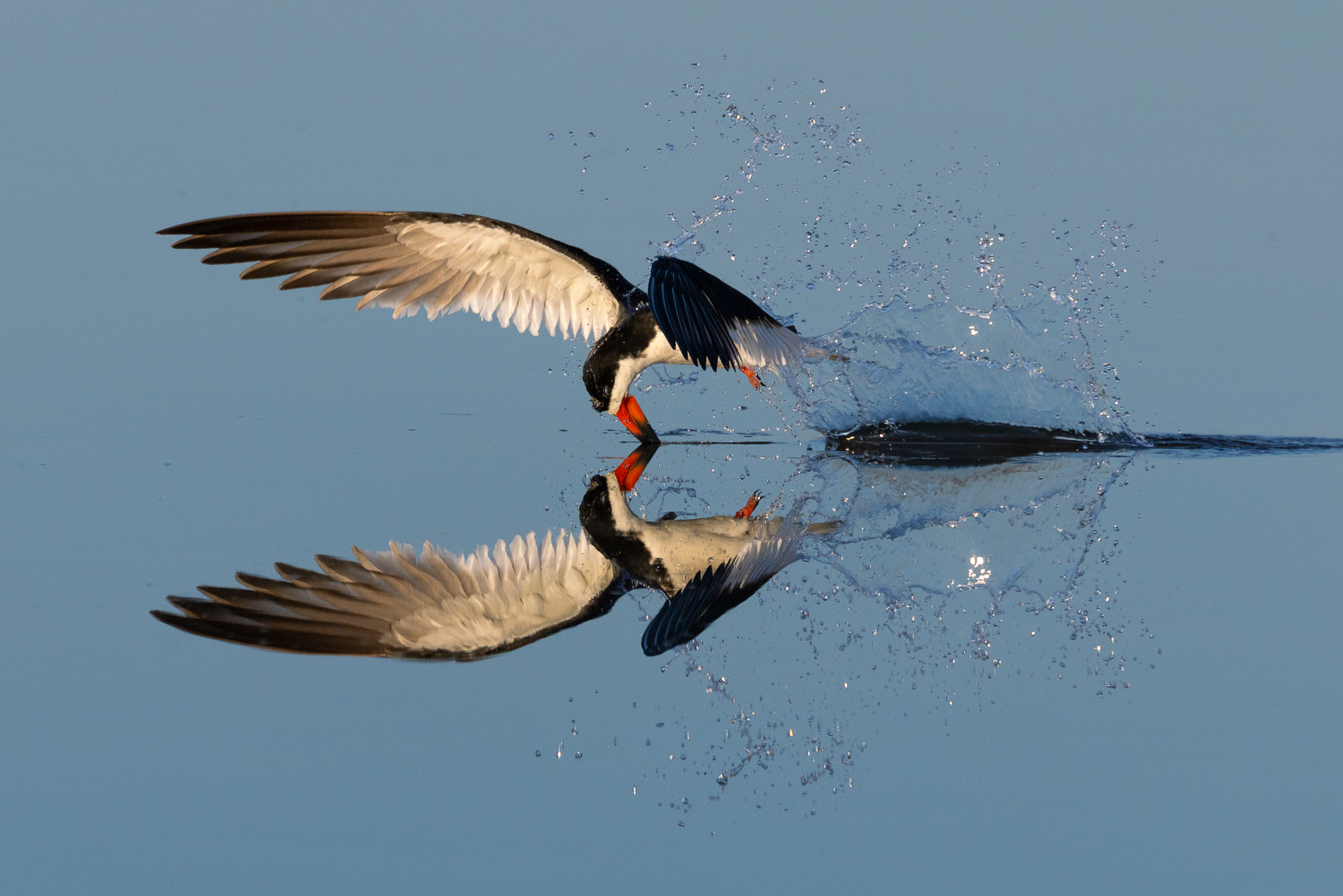
Black Skimmer · MontPhoto 2025 entry
expand ↓
What it could look like once submitted images are in the record
For now the tool asks one question: does your approach appear among what placed? Once photographers start contributing their non-placing entries, it can ask a more useful one: how often does your approach appear among winners compared to how often it appears in everything that was submitted? That is the comparison we have been missing.
Color Palette · numbers are illustrative
With only the winners' gallery, a zero tells you nothing; you can't tell whether an approach was never submitted or submitted constantly and kept losing.
What ImageIQ Cannot Do
The limits matter. Here are the things ImageIQ cannot do.
It cannot judge rarity. A model can identify a snow leopard. It has no idea that you spent eleven days at altitude to make the frame, or that the behavior you captured has been photographed in the wild only a handful of times. Rarity, ecological and photographic, is one of the strongest currencies in wildlife competition, and it lives almost entirely outside the pixels.
It cannot read narrative or conservation significance. Wildlife Photographer of the Year names originality, narrative, and ethical practice among its core criteria. In practice this means that an imperfect, never-before-seen moment can stand against the most beautifully composed photograph. A caption describing a conservation story is often what tips a result. A model assessing the image file knows none of this.
It cannot account for the human dynamics of judging. Sequence effects, panel conformity, contrast against the image shown just before yours, the priorities a contest wants its winning image to embody that particular year. These shape outcomes powerfully, and they are invisible to any analysis of the image alone.
There is also a way to use this badly: treating it as a template. A flag on one of the six qualities is the start of a question: am I doing this on purpose, or have I been making the same call without realizing it? The failure mode is skipping that question and copying what won. ImageIQ should make you think harder about your own choices, not stop making them.
Why Your Contribution Matters
The unusual thing about this project is that the most valuable evidence cannot be bought, scraped, or generated. The winning images are public. The non-winning entries exist only on the hard drives of the photographers who entered them. Yours included.
When you run an image through ImageIQ before entering, and then the results come out, the same action does two things: it gives you a read on your own work, and it adds one more real submission to the comparison.
I want to be careful about how this data is treated, because submitting unpublished work to a third party is not a small ask. What you upload is visible only to you. It is never published, never used in marketing, never shown to other users, and never used to train AI models. You can delete any image, or your entire submission history, at any time. When patterns are surfaced across the broader field, they are aggregated and anonymous, never tied back to an individual photographer or a specific image.
Where the Humans Come In
The obvious fear is that a tool like this reduces photography to optimization and makes hands-on learning feel secondary. I think it does the opposite.
ImageIQ can point to what and where. It can tell you that your compositions differ from the placed images in a category, or that your strongest dimension is light and your weakest is moment. But it cannot decide what kind of photograph you should be trying to make in the first place.
That work is still human. It includes planning, knowing the place, understanding the animal, reading the weather, recognizing the light, choosing the right frame from a sequence, or knowing how far to take a file in post-processing.
A diagnostic like ImageIQ can surface a weakness. It cannot turn that weakness into a better decision next time. But the clearer the diagnosis, the more useful good mentorship becomes. Not because someone can hand you a formula, but because they can help you understand which choices are worth changing and which ones are part of the photographer you are becoming.
Final Thoughts
We have all been limited to doing the same flawed, incomplete thing: studying the winners and treating them as if they explain the contest. They don't. They are only part of the story.
I don't think ImageIQ will tell anyone how to win, and it will never be a complete record of every image entered. What it can do is give you a less personal read of your own work. If enough photographers contribute, it can begin to answer questions no winners' gallery can answer: what separates the images judges selected from the much larger pool they passed over.