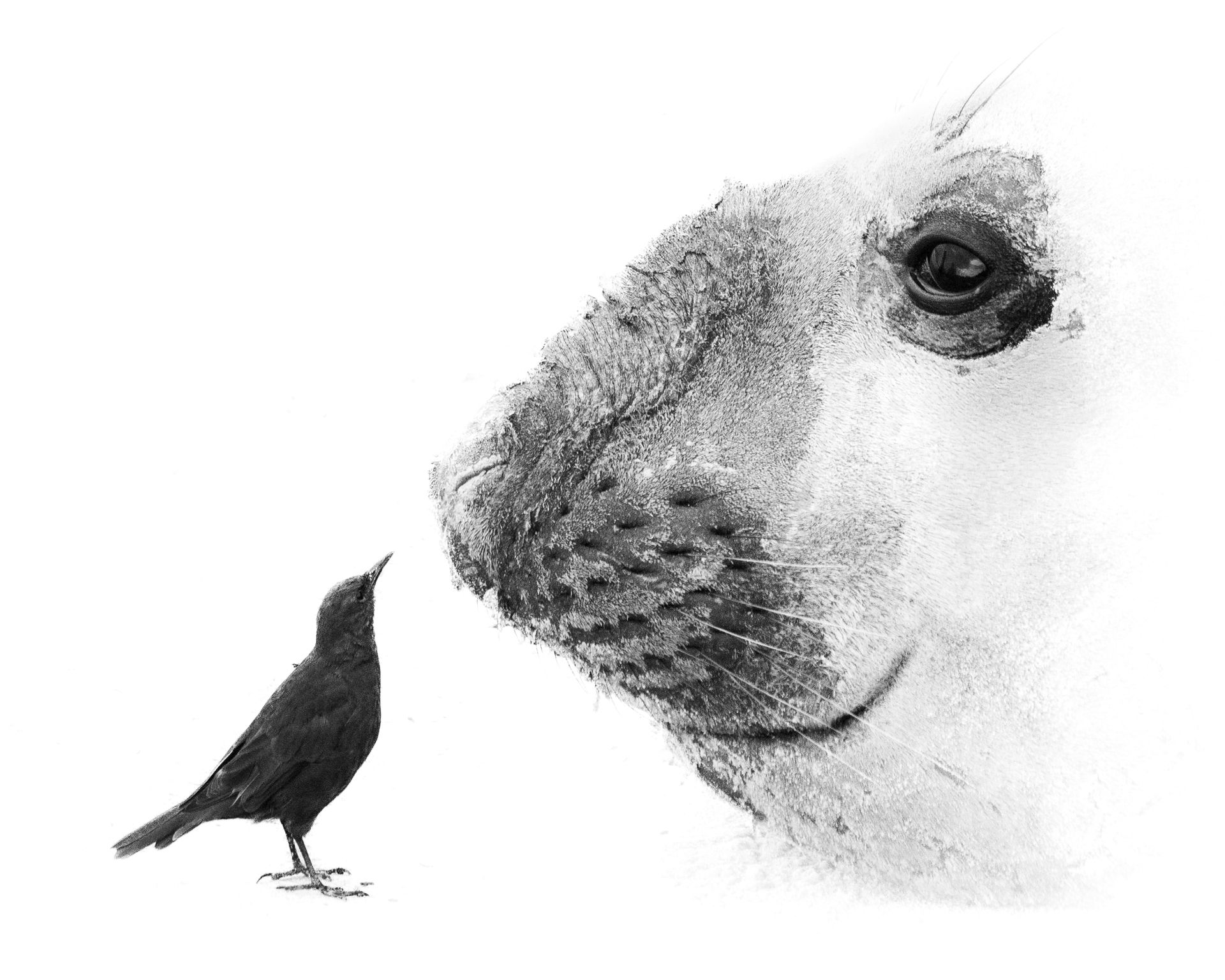
When I talk with clients, mentees and workshop participants about their photography travels, I am often struck by how much money and effort goes into getting to extraordinary wildlife locations, and how little that investment necessarily changes the level of the photography.
Svalbard, Alaska, Antarctica, Africa, Borneo... These trips can easily cost well into five figures. They put photographers in front of animals, behaviors and landscapes most people will never experience.
But access and photographic skill are two different things.
I saw the same disconnect while judging tens of thousands of images for Nature Photographer of the Year. Many were made in spectacular locations that most photographers may never have an opportunity to reach, yet a large part of the submission pool consisted of what I have described as level-one images: recognizable subjects, often technically competent, but without the photographic decisions that make an image stand apart.
And the photographer does not necessarily know this. Some recognize that their work is not where they want it to be. Others only see the gap later, as they become better at judging photographs, including their own.
Now, many photographers have no intention of sharing their work outside a close circle of family and friends, if even that, and that is perfectly OK. They do not need to come home with a NatGeo portfolio.
But if your goal is to develop as a photographer, improve your craft, perhaps place in a contest or simply make photographs that affect people who were not there with you, there is another question worth asking before booking the next trip.
What are you actually buying?
Access and education are not the same thing
A trip can be extremely well designed for photography without being designed to teach photography.
It may get you to the right place, at the right time, with an experienced photographer leading the group. All of that has real value. But none of it tells you what happens once you start making photographs.
This is where the terminology becomes surprisingly unhelpful. Photo tour. Photography workshop. Photo safari. Masterclass. A trip can be called a workshop and involve very little teaching, while another can be advertised as a tour and the leader teaches constantly.
Before getting into those labels, there is of course another option: organize the trip yourself, perhaps with another photographer.
That is how I have done most of my own photography. If you already have the field skills, visual judgment and experience to know what you are looking for, you may have little need for either a tour or a workshop. You control the schedule, make your own decisions and learn through the work itself.
The limitation is that you are also responsible for recognizing your own blind spots. If you do not yet know what is holding your photography back, working independently gives you no easy way of finding out.
What I mean by a photo tour
When I use the term photo tour here, I mean a trip whose main promise is the photographic opportunity rather than the photographer's development.
But even that opportunity can be delivered very differently.
Is everyone getting out of bed at an ungodly hour to be in the right place well before sunrise, resting in the middle of the day, and heading back out when the light improves? Does the leader know the location and wildlife well enough to put people where the best opportunities are likely to happen? Or is the schedule built more around what is convenient and acceptable to a broad range of clients and preferences?
Then comes the second question: what happens once you are standing in front of the wildlife?
Is there actual instruction, or are people placed in a location with wildlife and then largely left to their own devices? What is the leader doing while everybody else photographs?
On some trips, the leader's own photography is the priority, with teaching happening around it. On others, the leader may still photograph, but teaching is a central part of the job and their attention remains primarily on the participants. Those are very different experiences.
You can spend $20,000 getting to Antarctica and still make essentially the same photographic decisions you were making at home. The wildlife changes. The scenery changes. The opportunity may be extraordinary.
Your eye does not automatically improve somewhere over the Drake Passage because the trip got more expensive.
So what should make a workshop different?
That requires more than having an experienced photographer lead the trip and be available when somebody happens to have a question, because the photographer who needs the most help may not know what question to ask.
That is where teaching begins.
The instructor has to see something the photographer may not yet see, explain it, and give them an opportunity to do something differently.
Sometimes that happens immediately in the field. Sometimes it happens during image review later that day and changes what the photographer does during the next session.
Most photographers who have traveled enough know some version of this experience. There was a moment. You worked it as best you could, and later you looked at those frames and knew they did not hold what you saw.
Perhaps you understood why that evening, perhaps only when you got home, or perhaps years later when somebody finally showed you what you had not been seeing.
Which raises a practical question: how do you know before booking whether the person leading the workshop can actually provide that kind of guidance?
A good photographer is not automatically a good teacher
The obvious place to start is the leader's own photographs.
If you look at someone's body of work and repeatedly think, I wish I could make photographs like that, it tells you something useful. Awards and publications can tell you something as well.
But teaching is a separate skill.
The work of previous participants offers another kind of evidence. Of course I should be able to make strong photographs on one of my own workshops. The more interesting question is what the people I am teaching come home with.
Some photographers who have traveled with me were still very early in their photographic development and produced genuinely strong images during the workshop. The image at the top of this article, made by Jan Hansen during my 2026 Falklands workshop, is one example.
Part of that development happens in the field, and part of it happens afterward, in Lightroom. Editing cannot manufacture a strong photograph from nothing, but making the exposure is not the end of the process either.
Strong participant work is encouraging, but it still does not show you how the workshop is actually run. For that, you have to look at the structure of the trip itself.
How do you tell what you are actually buying?
Look for answers to these questions or ask directly:
- What does a typical day actually look like?
- What pre-trip preparation or support is included?
- How does the leader decide where the group will be and when?
- What does the leader typically do while participants are photographing?
- How is image review handled during the trip?
A leader who has deliberately built teaching into the trip should be able to answer those questions with specifics. If the answers are mostly about logistics, locations and photographic opportunities, that tells you something about what the trip is primarily designed to provide.
Where does a masterclass fit?
Masterclass is not a term commonly used for photography trips, and there is no standard definition for it. I use it alongside workshop to describe the depth of teaching involved.
For me, the masterclass part begins when the teaching extends beyond solving problems in the field and encompasses the whole process of becoming a stronger photographer.
Field craft is still part of it, of course. But a finished body of work requires another set of decisions. Which images are actually worth keeping? Why is one frame in a sequence stronger than another? What is the photograph really about? How far should the editing go, and when does it begin working against the image rather than for it?
Those questions matter because a photographer can make progress in the field and still struggle to recognize the strongest work afterward. The reverse happens too. Someone may understand what a sophisticated photograph looks like but not yet have the field skills to create the opportunities consistently.
The goal is to connect those pieces so participants leave with a better understanding of their own photography and a stronger ability to work independently afterward.
That is a much more demanding product to deliver. It requires more attention to each photographer, more time spent reviewing work and a willingness from the instructor to put the participant's development ahead of their own portfolio.
And yes, that can make the trip more expensive.
So what do you want from the trip?
When comparing photography trips, it is natural to start with price, number of days, itinerary, accommodation and group size. All of those things matter, but they tell you little about the educational side of the trip.
If your main goal is to visit an extraordinary place and photograph largely on your own terms, extensive teaching may have little value to you.
But if you are spending that money partly because you want to become a stronger photographer, make images that reach others and perhaps succeed in a contest, then the quality and depth of the instruction deserve to be part of the decision too.
When that happens, another extraordinary destination does not solve the problem. If the bottleneck is the decisions you make in the field, or what you later bring out in your files, then those are the things worth investing in.
The real leverage of a well-taught workshop is that its value is not confined to the photographs you make there. It changes what you are able to do with the opportunities that come after it.
If you want that, alongside exceptional wildlife access, I currently have a few openings on upcoming workshops and masterclasses: